Freeway projects look straightforward from a passing vehicle, but the work behind them involves planning, coordination, site preparation, and constant field oversight. A freeway improvement contractor helps move those projects from concept to usable infrastructure by managing the groundwork that supports safer and more durable roads. That role includes inspection, grading, drainage, traffic coordination, and the detailed preparation required before the final driving surface and roadway features can perform as intended. For owners, developers, engineers, and public works teams in Northern Nevada, the right contractor helps keep a complex job organized, practical, and ready for long-term use.
Inspections play a major role in freeway improvement work because every phase builds on the one before it. A contractor cannot move confidently into the next step if the site conditions, subgrade, drainage, or utility coordination do not support the design. That is why a freeway improvement contractor spends time verifying field conditions, checking completed work, and confirming that crews stay aligned with project requirements. Good inspection habits protect quality, reduce rework, and help maintain a smoother flow across the entire schedule.
Inspection work starts long before the final roadway features go into place. Crews need to review grades, elevations, drainage paths, and the condition of the site so they can catch issues early. When old surfaces, uneven ground, or unexpected field conditions show up, a contractor has to respond before those problems affect the next trade. That early attention helps support safer work areas and a more reliable finished result.
F & P Construction treats inspection as part of responsible project execution rather than a box to check at the end of a phase. The team works across excavation, grading, underground utilities, and site development, which means they understand how each scope affects the next one. That broader perspective matters on freeway and public works jobs because roadway performance depends on what happens below the surface as much as what drivers see above it. Since 1991, F & P Construction has built its work around precision, accountability, and coordination across Northern Nevada civil construction.
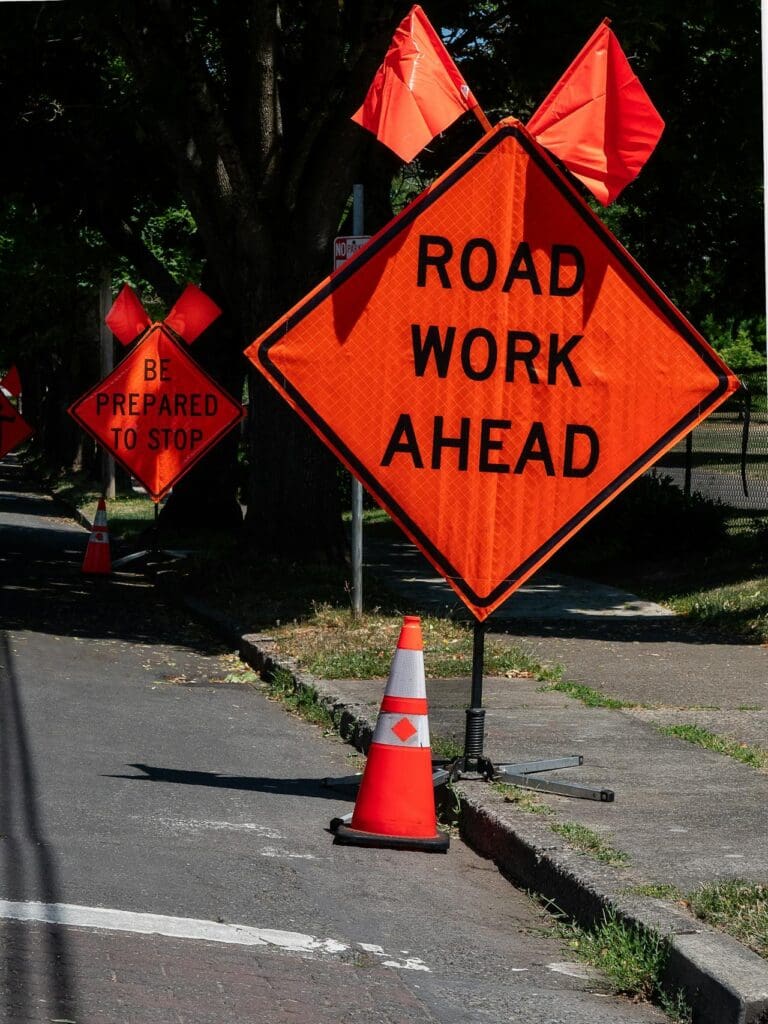
Traffic control matters because freeway improvement projects take place in active, high-visibility environments. Even when a contractor is not designing the traffic control plan, the field team still has to work within it carefully and consistently. A freeway improvement contractor must understand how lane closures, work windows, crew movement, and equipment access affect both safety and productivity. Poor coordination creates confusion, slows work, and increases risk for workers and the traveling public alike.
This part of the job requires discipline because freeway work rarely happens in a perfectly open area. Crews may be working near existing lanes, access points, bridge approaches, or adjacent site development zones that remain active during construction. The contractor has to sequence work in a way that respects access, keeps the site organized, and avoids unnecessary interference with ongoing traffic patterns. That means the field team must think ahead about staging, material movement, and timing so the project moves efficiently from one work area to the next.
Traffic-related coordination affects more than public safety. It also affects scheduling, labor efficiency, equipment usage, and how smoothly a job moves from excavation to grading to final site preparation. F & P Construction approaches roadway and public works projects with the understanding that every disruption carries a cost, even when the work itself is necessary. That is one reason the team emphasizes planning, communication, and disciplined field execution on complex civil jobs across the Reno region.
Many people assume freeway improvement begins with paving or striping, but the real work starts much earlier. Before new coatings, markings, or roadway features can perform well, the underlying surface has to be properly prepared. A freeway improvement contractor often deals with pavement failures, uneven conditions, drainage concerns, worn surfaces, and the removal of outdated materials that no longer serve the project. Surface preparation is what gives the next phase a fair chance to last, and when it gets rushed or treated as secondary, the final result tends to reflect that shortcut.
This phase depends heavily on excavation, grading, and subgrade preparation. If the grade is off, drainage can suffer and long-term roadway performance can follow. If weak spots remain in place, the surface above them may not hold up the way the owner expects. Contractors working in this space need to understand how earthwork, stability, and drainage all interact before the visible roadway improvements begin, which is why site preparation remains one of the most important parts of any freeway improvement project.
F & P Construction brings a site-first mindset to its work across Northern Nevada. Services include excavation and earthmoving, mass and fine grading, underground utilities, and site development, which places roadway preparation within a larger civil construction picture. The team uses GPS-guided equipment for grading and focuses on proper drainage and stability because those details support the life of the infrastructure above them. Close coordination with engineers and general contractors helps the site meet the needs of the project as a whole, which matters on freeway, highway, and public works jobs where performance starts below the finished surface.
A freeway improvement contractor also has to think like a planner. The work does not succeed on field effort alone, because material quantities, labor timing, equipment use, and sequencing all affect how efficiently the job moves. Precise estimation helps a project team avoid waste, reduce avoidable delays, and prepare for each stage with a clearer understanding of what the work actually requires. It also supports stronger communication with the broader project team because expectations stay grounded in the realities of the site.
Material and labor planning become even more important on jobs that involve multiple scopes. Roadway improvements often connect with utilities, drainage systems, grading transitions, bridge approaches, and broader site development demands that all need to be accounted for in the plan. A contractor has to understand how those pieces interact so the job does not become fragmented or reactive as work progresses. Careful estimation supports better scheduling of crews and equipment and helps keep the project aligned with the intended sequence of work from start to finish.
F & P Construction approaches this work as a Class A General Engineering Contractor with an unlimited Nevada license and decades of civil construction experience behind it. That background matters because freeway improvement work rarely stands alone from the rest of the infrastructure surrounding it. The team carries experience in roads, highways, public works, excavation, grading, underground utilities, and complete site preparation, which supports planning with a broader understanding of the project environment. More than three decades of shaping industrial and commercial development in Northern Nevada gives the team the field perspective to make practical decisions when it matters most.
Freeway improvement work requires more than a capable crew with the right equipment. It requires a contractor who understands how grading, drainage, utilities, and roadway preparation connect to each other and to the performance of the infrastructure above. A team that sees only the surface scope misses the factors most likely to affect how the finished project holds up over time. F & P Construction brings a civil construction background that spans the full range of site work, which means the team is not learning the relationship between those scopes on your project.
The ability to coordinate across multiple disciplines on a single job site also reduces the friction that slows complex projects down. When the same contractor understands excavation, utilities, grading, and site development, the handoffs between those scopes become cleaner and the decisions that affect multiple phases get made with the full picture in view. Project owners and general contractors working in Northern Nevada benefit from that kind of continuity rather than managing separate specialty contractors who may not communicate well with each other. A single contractor who sees the whole job tends to produce a more organized and efficient site.
F & P Construction has been doing this kind of work in Northern Nevada since 1991, and the projects completed over those decades represent a consistent record of civil construction performance across a wide range of site types and conditions. The team's familiarity with local ground conditions, regulatory requirements, and the practical demands of roadway and public works projects in the region helps reduce the learning curve that affects contractors working outside their home market. For project teams planning a highway, public works, or site development project in Reno or across Northern Nevada, that local experience is a resource worth putting to use early in the planning process.
Freeway improvement work depends on inspection, traffic coordination, solid site preparation, and accurate planning that supports quality from the ground up. A contractor who understands how grading, drainage, utilities, and roadway preparation connect can help reduce disruption and deliver a more dependable finished product. F & P Construction brings more than thirty years of civil construction experience to freeway, highway, and public works projects across Northern Nevada. Project teams ready to discuss an upcoming job can contact F & P Construction to talk through the scope and how the team's experience can support the work ahead.