Homeowners and project owners in Reno often need a contractor who can keep a job organized, communicate clearly, and deliver work that holds up over time. F & P Construction offers that kind of support while also serving commercial and industrial clients with excavation, grading, utilities, and site development services in Northern Nevada. For readers comparing options, the real question is not just who can start a project, but who can manage it with fewer delays and fewer surprises. That is where local experience and reliable project management can make a clear difference.
When a Reno homeowner plans a remodel, addition, or exterior improvement, the contractor choice affects both the project experience and the long-term value of the property. F & P Construction brings local knowledge, clear communication, and organized project management to work that needs to be done carefully and on schedule. The company serves the Reno area as a specialty contractor with experience in demolition and earthwork, which supports projects that depend on solid preparation and coordination. That matters when a homeowner wants one team to keep the work moving without losing sight of quality.
Reno properties face practical challenges that make skilled construction support especially important. Weather, soil conditions, permitting, and site access can all affect timelines and budgets, so homeowners benefit from a contractor that understands the local environment. F & P Construction’s Northern Nevada presence gives clients a local point of contact and a team that works in the same market every day. That familiarity can help homeowners feel more confident when they need to move from planning to action.
A well-managed project also protects the value of the home after the work is complete. Careful construction helps reduce the risk of rework, unfinished details, and avoidable damage during the build. F & P Construction’s focus on excavation, grading, utilities, and site development also supports the groundwork that many residential upgrades depend on. For a homeowner who wants a smoother path from estimate to completion, that mix of planning and field experience can make the decision easier.
Many homeowners delay projects because they worry about communication problems, changing schedules, or contractors who do not follow through. F & P Construction helps reduce that stress by bringing local experience and project structure to the work from the beginning. A contractor with a clear process can make each step easier to understand and less overwhelming for the client. That matters for remodels, additions, and exterior improvements where multiple moving parts can create confusion.
Clear communication helps homeowners stay informed and avoid unnecessary guesswork. When a contractor explains the scope, schedule, and site needs early, the project feels more manageable and less disruptive. F & P Construction’s Reno presence and established contact information make it easier for clients to reach a real local company when questions come up. That kind of accessibility can lower frustration during work that affects a home’s daily routine.
Reliable project management also helps protect the household from costly delays. A coordinated team can keep trades aligned, help manage expectations, and reduce the chance of missed steps that slow progress. F & P Construction’s background as a specialty contractor in demolition and earthwork shows a focus on the early phases that often shape the rest of the project. When the start of the job runs smoothly, the rest of the process usually becomes easier to manage.
Strong construction results depend on planning before the first shovel hits the ground. F & P Construction’s Reno work stands out because decades of experience and a collaboration-focused approach help make sure details do not get overlooked. The company’s service mix in excavation, grading, utilities, and site development shows that it works on the practical side of project preparation as well as the visible finished product. That breadth of work supports better coordination from the beginning.
Planning matters because every site brings different demands. A remodel may require careful sequencing, an addition may need site preparation, and an exterior improvement may depend on grading and drainage work that supports the final result. F & P Construction’s experience in demolition and earthwork gives the team a foundation for handling the early work that many projects need before construction can move forward. That kind of preparation can reduce avoidable setbacks later.
Clients often want a contractor who can collaborate instead of forcing a rigid, one-size-fits-all process. A collaborative approach helps the team account for site conditions, project goals, and the practical realities of construction in Reno. F & P Construction’s local operation in Northern Nevada supports that kind of coordination because the company works in the same region where its clients live and build. For homeowners and project owners alike, that creates a more direct and predictable path forward.
Commercial and industrial projects often start with excavation, grading, and site development, and those services demand technical control. F & P Construction specializes in those areas for commercial and industrial work in Northern Nevada. That focus makes the company relevant for clients who need dependable groundwork before vertical construction begins. It also positions the team as a practical choice for projects that require attention to site conditions and build readiness.
Excavation and grading affect more than just the first phase of a job. They influence drainage, stability, access, and the quality of the finished site. F & P Construction’s listing as a specialty contractor in demolition and earthwork supports its role in this early-stage work, especially for projects that need land cleared and shaped correctly. When this phase is handled well, later construction has a stronger base.
Industrial and commercial clients often value teams that can keep work organized around permits, access, and scheduling demands. F & P Construction’s Northern Nevada service area and local business presence give project owners a contractor that operates close to the job site and understands the region’s needs. For decision-makers comparing options, that local focus can make it easier to move from estimate to mobilization with fewer delays. It also gives clients a clear next step when they need a contractor who can handle site development with practical efficiency.
F & P Construction in Reno brings together local experience, clear communication, and reliable project management for clients who want construction work handled with care. Homeowners looking at remodels, additions, or exterior improvements can see value in a team that helps reduce stress and protect long-term results. Commercial and industrial clients can also turn to the company for excavation, grading, utilities, and site development that support the early stages of a build. For readers ready to compare contractors, contacting F & P Construction is a practical next move when the project depends on solid planning and dependable execution.
I manage operations for F & P Construction in Reno, and our Class A General Engineering Contractor license is really the backbone of how we handle every project. If you are a business owner planning a large-scale development, you probably already know that Nevada’s infrastructure needs are pretty demanding. This license is what allows us to handle those complex jobs with the precision and compliance they require.
When people ask me about our classification, it is usually because they want to make sure they are partnering with a qualified team. Understanding these requirements helps you pick a contractor who can actually deliver reliable results on the big stuff.
Nevada doesn't make it easy to get a Class A license, and for good reason. Regulators set high standards to make sure anyone working on major infrastructure actually knows what they are doing.
Hands-on Experience: Applicants have to prove at least four years of journeyman-level experience within the last decade.
Real-World Leadership: This isn't just about time on a clock; it is about leading crews through tasks like earthmoving and pipeline installation.
Local Expertise: Our team built that experience right here, navigating Nevada's unique terrain and rocky soil.
This foundation means that when we are coordinating site development, we are drawing on years of leading crews in the field. It minimizes delays and ensures every phase aligns with the engineering plans. If you need a contractor who has already put in the work to meet these qualifications, feel free to reach out to our Reno office.
A Class A license authorizes us to work on the high-impact projects that keep Nevada moving. We are talking about highways, bridges, dams, tunnels, and utilities. These jobs require a massive amount of coordination between engineering and heavy equipment operations.
We focus heavily on the groundwork, like precise grading for highway bases or managing soil stability for bridges. Pipelines and sewers are another big part of the job; they require accurate underground routing to avoid headaches down the road. Business owners get a lot of peace of mind knowing we are operating within these defined limits and meeting public safety standards. From industrial complexes to new subdivisions, we deliver the excavation and earthwork that makes these projects possible.
The Class A license also offers subclassifications, which are basically specialties like airports, excavating, paving, and industrial piping. These allow us to be even more targeted with our expertise.
Excavating: This covers everything from clearing land to final contours, which we do often at the Tahoe Reno Industrial Complex.
Paving: We ensure smooth, durable surfaces for highways and specialized airport runways.
Industrial Piping: We handle the complex underground systems that keep utilities and facilities running.
By combining these specialties, we can offer full-site development. It helps to have a team that understands how the paving connects to the drainage and how the piping fits into the overall utility flow.
Before anyone gets this license, they have to pass two rigorous exams: the Contractors Management Survey and a specific trade exam. These tests are designed to verify both management skills and technical knowledge.
The management portion covers business practices and Nevada laws, while the trade exam tests us on practical engineering applications like grading and utilities. Passing these exams proves that we can lead large teams effectively and handle contracts compliantly from the initial bid to the final walk-through. It is a tough process, but it ensures that when you hire us, you are getting a team that has been thoroughly vetted by the state.
A Class A license is a lot more than just a piece of paper; it represents years of experience, a wide range of authorized work, and a commitment to high standards. At F & P Construction, we hold this unlimited license and specialize in the excavation and site development that fuels Reno’s growth.
Whether you are working on a project in the Tahoe Reno Industrial Complex or building a new subdivision, we are here to be a reliable partner. Reach out to F & P Construction today to talk about your next infrastructure project and see how we can help.
Freeway projects look straightforward from a passing vehicle, but the work behind them involves planning, coordination, site preparation, and constant field oversight. A freeway improvement contractor helps move those projects from concept to usable infrastructure by managing the groundwork that supports safer and more durable roads. That role includes inspection, grading, drainage, traffic coordination, and the detailed preparation required before the final driving surface and roadway features can perform as intended. For owners, developers, engineers, and public works teams in Northern Nevada, the right contractor helps keep a complex job organized, practical, and ready for long-term use.
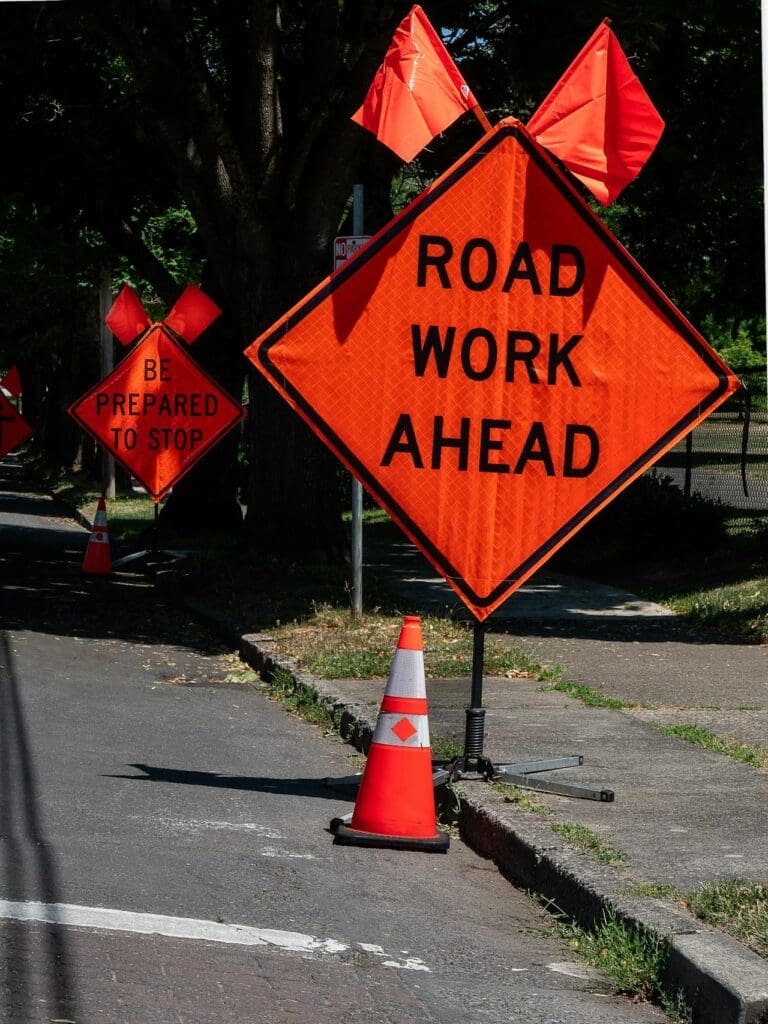
Inspections play a major role in freeway improvement work because every phase builds on the one before it. A contractor cannot move confidently into the next step if the site conditions, subgrade, drainage, or utility coordination do not support the design. That is why a freeway improvement contractor spends time verifying field conditions, checking completed work, and confirming that crews stay aligned with project requirements. Good inspection habits protect quality, reduce rework, and help maintain a smoother flow across the entire schedule.
Inspection work starts long before the final roadway features go into place. Crews need to review grades, elevations, drainage paths, and the condition of the site so they can catch issues early. When old surfaces, uneven ground, or unexpected field conditions show up, a contractor has to respond before those problems affect the next trade. That early attention helps support safer work areas and a more reliable finished result.
F & P Construction treats inspection as part of responsible project execution rather than a box to check at the end of a phase. The team works across excavation, grading, underground utilities, and site development, which means they understand how each scope affects the next one. That broader perspective matters on freeway and public works jobs because roadway performance depends on what happens below the surface as much as what drivers see above it. Since 1991, F & P Construction has built its work around precision, accountability, and coordination across Northern Nevada civil construction.
Traffic control matters because freeway improvement projects take place in active, high-visibility environments. Even when a contractor is not designing the traffic control plan, the field team still has to work within it carefully and consistently. A freeway improvement contractor must understand how lane closures, work windows, crew movement, and equipment access affect both safety and productivity. Poor coordination creates confusion, slows work, and increases risk for workers and the traveling public alike.
This part of the job requires discipline because freeway work rarely happens in a perfectly open area. Crews may be working near existing lanes, access points, bridge approaches, or adjacent site development zones that remain active during construction. The contractor has to sequence work in a way that respects access, keeps the site organized, and avoids unnecessary interference with ongoing traffic patterns. That means the field team must think ahead about staging, material movement, and timing so the project moves efficiently from one work area to the next.
Traffic-related coordination affects more than public safety. It also affects scheduling, labor efficiency, equipment usage, and how smoothly a job moves from excavation to grading to final site preparation. F & P Construction approaches roadway and public works projects with the understanding that every disruption carries a cost, even when the work itself is necessary. That is one reason the team emphasizes planning, communication, and disciplined field execution on complex civil jobs across the Reno region.
Many people assume freeway improvement begins with paving or striping, but the real work starts much earlier. Before new coatings, markings, or roadway features can perform well, the underlying surface has to be properly prepared. A freeway improvement contractor often deals with pavement failures, uneven conditions, drainage concerns, worn surfaces, and the removal of outdated materials that no longer serve the project. Surface preparation is what gives the next phase a fair chance to last, and when it gets rushed or treated as secondary, the final result tends to reflect that shortcut.
This phase depends heavily on excavation, grading, and subgrade preparation. If the grade is off, drainage can suffer and long-term roadway performance can follow. If weak spots remain in place, the surface above them may not hold up the way the owner expects. Contractors working in this space need to understand how earthwork, stability, and drainage all interact before the visible roadway improvements begin, which is why site preparation remains one of the most important parts of any freeway improvement project.
F & P Construction brings a site-first mindset to its work across Northern Nevada. Services include excavation and earthmoving, mass and fine grading, underground utilities, and site development, which places roadway preparation within a larger civil construction picture. The team uses GPS-guided equipment for grading and focuses on proper drainage and stability because those details support the life of the infrastructure above them. Close coordination with engineers and general contractors helps the site meet the needs of the project as a whole, which matters on freeway, highway, and public works jobs where performance starts below the finished surface.
A freeway improvement contractor also has to think like a planner. The work does not succeed on field effort alone, because material quantities, labor timing, equipment use, and sequencing all affect how efficiently the job moves. Precise estimation helps a project team avoid waste, reduce avoidable delays, and prepare for each stage with a clearer understanding of what the work actually requires. It also supports stronger communication with the broader project team because expectations stay grounded in the realities of the site.
Material and labor planning become even more important on jobs that involve multiple scopes. Roadway improvements often connect with utilities, drainage systems, grading transitions, bridge approaches, and broader site development demands that all need to be accounted for in the plan. A contractor has to understand how those pieces interact so the job does not become fragmented or reactive as work progresses. Careful estimation supports better scheduling of crews and equipment and helps keep the project aligned with the intended sequence of work from start to finish.
F & P Construction approaches this work as a Class A General Engineering Contractor with an unlimited Nevada license and decades of civil construction experience behind it. That background matters because freeway improvement work rarely stands alone from the rest of the infrastructure surrounding it. The team carries experience in roads, highways, public works, excavation, grading, underground utilities, and complete site preparation, which supports planning with a broader understanding of the project environment. More than three decades of shaping industrial and commercial development in Northern Nevada gives the team the field perspective to make practical decisions when it matters most.
Freeway improvement work requires more than a capable crew with the right equipment. It requires a contractor who understands how grading, drainage, utilities, and roadway preparation connect to each other and to the performance of the infrastructure above. A team that sees only the surface scope misses the factors most likely to affect how the finished project holds up over time. F & P Construction brings a civil construction background that spans the full range of site work, which means the team is not learning the relationship between those scopes on your project.
The ability to coordinate across multiple disciplines on a single job site also reduces the friction that slows complex projects down. When the same contractor understands excavation, utilities, grading, and site development, the handoffs between those scopes become cleaner and the decisions that affect multiple phases get made with the full picture in view. Project owners and general contractors working in Northern Nevada benefit from that kind of continuity rather than managing separate specialty contractors who may not communicate well with each other. A single contractor who sees the whole job tends to produce a more organized and efficient site.
F & P Construction has been doing this kind of work in Northern Nevada since 1991, and the projects completed over those decades represent a consistent record of civil construction performance across a wide range of site types and conditions. The team's familiarity with local ground conditions, regulatory requirements, and the practical demands of roadway and public works projects in the region helps reduce the learning curve that affects contractors working outside their home market. For project teams planning a highway, public works, or site development project in Reno or across Northern Nevada, that local experience is a resource worth putting to use early in the planning process.
Freeway improvement work depends on inspection, traffic coordination, solid site preparation, and accurate planning that supports quality from the ground up. A contractor who understands how grading, drainage, utilities, and roadway preparation connect can help reduce disruption and deliver a more dependable finished product. F & P Construction brings more than thirty years of civil construction experience to freeway, highway, and public works projects across Northern Nevada. Project teams ready to discuss an upcoming job can contact F & P Construction to talk through the scope and how the team's experience can support the work ahead.
Although millions of square feet of new Class A industrial space has been added to the greater Reno area industrial market over the past decade — and much of that product has been leased to large companies taking down hundreds of thousands of square feet at a time — there’s been scant attention given to smaller light industrial tenants who need just a few thousand square feet for their business operations.
Private commercial real estate developer Herman Christensen & Sons of San Carlos, Calif., is changing the landscape for smaller flex industrial users with the development of Kiley Commerce Center in Spanish Springs. The development at the corners of Wingfield Hills and David Allen parkways consists of five buildings, three of which have already broken ground.
Two of the buildings under development are each 23,750 square feet, while the third is considerably larger at 67,500 square feet. The two smaller buildings will be subdivided into 20 total spaces of 2,375 square feet, while the larger building will be subdivided into 10 total spaces of 6,750 square feet. However, spaces can be combined to accommodate mid-sized businesses, said Gavin Christensen, president of Herman Christensen & Sons.
Each of the larger units will include a dock in the rear, while the smaller units will have drive-in capabilities with roll-up doors.
“We are targeting smaller users,” Christensen said. “We feel like that market has been a little underserved in Reno. There has been a lot of big distribution space built, but not a lot of space catering to smaller local businesses. We feel there is an opportunity to provide space for them.
“We have found from experience that it’s also hard to find docks on spaces in that size range,” he added.
Historically, smaller light industrial users had few options outside of leasing outdated Class B and class C industrial space in submarkets such as Sparks near the Truckee River or by the airport. Herman Christensen & Sons acquired nearly 35 acres in Spanish Springs several years ago with the goal of developing between 18 to 20 acres into modern light industrial that caters to local businesses.
Pat Morrissey of Morrissey Realty helped Herman Christensen & Sons acquire the land. Tomi Jo Lynch, first vice president of industrial properties at the Reno office of CBRE, will handle leasing for Kiley Commerce Center.
“With the number of rooftops in Spanish Springs there’s a need for this type of product,” Lynch said. “We will attract some users from Sparks who want to upgrade their space, but there’s really no fully planned business park like this in the area. All the industrial in the area is much larger, and we are filling a niche in the market that hasn’t been filled for a long time.

Tomi Jo Lynch
“There is a lot of older product in Reno and Sparks, and the demand on that product has remained really high,” Lynch added. “Occupancy also has remained relatively high in those spaces – especially in the newer buildings. It speaks volumes about the need for this type of product."
Christensen expects the tenant base at Kiley Commerce Center to be a mix of light industrial users such as assembly or manufacturing companies, smaller regional contractors and construction services firms, and professional office users who also need warehouse storage.
Kiley Commerce Center is the company’s first development play in Northern Nevada, but it has a long history of developing commercial real estate in the East Bay and San Francisco Peninsula regions. The company develops commercial real estate as a long-term investment, Christensen said.
Herman Christensen & Sons Greater Bay Area portfolio includes three light industrial parks and some research and development space totaling more than 1 million square feet. It also owns a few multifamily properties, Christensen said.
“We are long-term owners; we have no intention of selling,” he said. “We plan our product for the long haul. We don’t build it and spin it off, so we do try to design good assets for the long-term hold.”
Herman Christensen & Sons wanted to cast a slightly wider net outside of the expensive and overcrowded Bay Area market, and Reno was a logical choice for the company’s development capital, Christensen said.
“Geographically it's relatively close, its economy is booming, and we had contacts there. It was a natural (play) for us,” he said.
“It wasn’t easy to find land,” he added. “There’s not a lot of vacant land.”
Pinecrest Construction is the general contractor on the development. F and P Construction has almost completed mass grading for all five building pads at the site. The first three buildings are expected to come online in the spring.
The next phase of development calls for another 67,500 square-foot building, along with a smaller 28,500 square-foot building.
“We haven’t totally defined its use,” Christensen said. “It depends on absorption and what kind of market demand we see.”
Randy Pitts, owner of F & P Construction in Reno, NV, is no stranger to the challenges of mass excavation. His current project in the Tahoe-Reno Industrial Center called for moving more than a half-million yards of rocky soil to prepare a pad for a 703,000 square-foot warehouse. Pitts needed to break through about six feet of sun-baked hardpan and deal with many large boulders and cobble embedded in the soil. At 104,000 acres, the Center is one of the world’s largest industrial parks. F & P Construction has been working here since 2005, building roads and railroad beds, digging sewer and water trenches, and preparing sites for new buildings.
Initially, Pitts relied on a dozer/wheel loader combo for moving material, with the dozer pushing materials to a wheel loader that would then load six articulated trucks. This was effective, but Pitts aimed to increase his productivity by adding a mass excavation unit to the site. To do so, he brought in the 463-horsepower, 153,400-pound CX700B from CASE Construction Equipment—an excavator with a 5.91-cubic-yard bucket dedicated to mass excavation. The overall speed and power of the machine has allowed Pitts to increase his productivity by 46%—and to do so without adding any additional equipment.
“The CASE excavator is a one-man machine that can dig and load. So I have an excavator operator and a truck driver compared to a three-man operation for dozer, loader, and truck,” explains Pitts. “Before we bought the CASE CX700B, we moved around 7,500 yards a day. With the new excavator that jumped to 11,000 yards. I could use my current fleet of trucks, [and] I could fill them up a lot faster.”
Pitts considered a variety of excavators for the project, but decided the CASE CX700B presented to him by Sonsray Machinery of Sparks, NV, would provide the right combination of performance and cost. “Price is one part of it, financing, weight class was a big part of it. I knew I wanted a good, heavy strong machine.”
“It’s all about volume,” he continues. “The bigger the machine, the bigger the bucket. But we’re also very impressed with the cycle times. It’s a really fast swinging machine and the faster you swing, the faster you load your trucks. I’d bet it’s about 15 to 20% faster than other excavators we’ve used.”
Speed and power are hallmarks of the CX700B thanks to a combination of hydraulics and engine power, which also helps improve fuel efficiency (calculated in mass excavation applications by yards of material moved per gallon of fuel). The CX700B gives the operator complete control over engine output and hydraulic power through three operation modes, which optimizes engine output to meet the application demands. Features such as regenerative hydraulics on the boom, arm, and bucket, and large-diameter hydraulic cylinders provide everything from increased breakout forces to the faster cycle times that have helped contribute to the increase in productivity.
Pitts’ son Dayton is the field superintendent on the Tahoe-Reno Industrial Center project. Like his father, Dayton is impressed with the cycle times of the CASE CX700B. “You know, the biggest eye opener is the speed for such a large excavator. It cycles very fast. We’ve had it next to other machines and it beat them hands down.”
F & P Construction matched the excavator with three 40-ton articulated trucks. Rather than adding additional trucks, the company simply split its existing fleet of six between the wheel loader/dozer combo and the CX700B. This allowed the company to more efficiently cycle its trucks throughout the site and increase its production by 3,500 yards-per-day without adding new trucks or drivers—a significant increase in production without an excessive addition of equipment.
Besides high capacity and faster cycle times, the machine has also proven easy to operate. The large climate-controlled cab provides ample space and comfort for the operator. And the ability to flip control patterns (through an optional control pattern selector valve) allowed the company’s primary operator to run the new excavator without a learning curve.
“Our operator couldn’t run the one hydraulic pattern—he ran an opposite pattern,” says Randy Pitts. “The idea was to flip the controls over to the other type of a pattern that he could operate. It made a big difference to where he could run it. I know machines on a job that he can’t run because they don’t have the ability to flip their hydraulic pattern.”
The relationship with Sonsray Machinery was also an important part of the equation. Randy Pitts has been buying CASE equipment since he started his business, but had not bought anything the size of the CX700B.
“I’ve always been a CASE backhoe guy,” he says. “I’ve always owned a lot of CASE backhoes and 570s and a couple of loaders. I’ve owned a small CASE dozer at one time. I’ve dealt with CASE and Sonsray for the last 23 years. This is the first time that I’ve ever got a machine this size from Sonsray—they’re bringing the larger CASE machines to town.”
Dayton Pitts is glad they did. “I thought, wow, I didn’t know CASE made anything that big, so I had to play with it—compare it to the other big excavators. It was very impressive.” He adds, “With all these rocks, we still haven’t found anything that can stop the CX700B. It pulled out some really big boulders that stopped other big excavators.”
Pitts’ crew had 10 weeks to complete the main excavation of the site. They did it in six. But they weren’t done there:
“We’ll put on a smaller bucket to dig and install 20-foot deep sewer lines and 15-foot deep storing drains,” says Randy Pitts. “When you have to set 36-inch pipe and drag shields, a big machine like the CX700B really makes a difference.”
“Our real forte is mass grading,” concludes Pitts. “With my mining background, I’ve learned to move dirt and materials fast and with precision. To do that out here you need big excavators, big loaders and big haul trucks.”
“Once we got the CX700B out here, our production rate really picked up.”